-
-
-
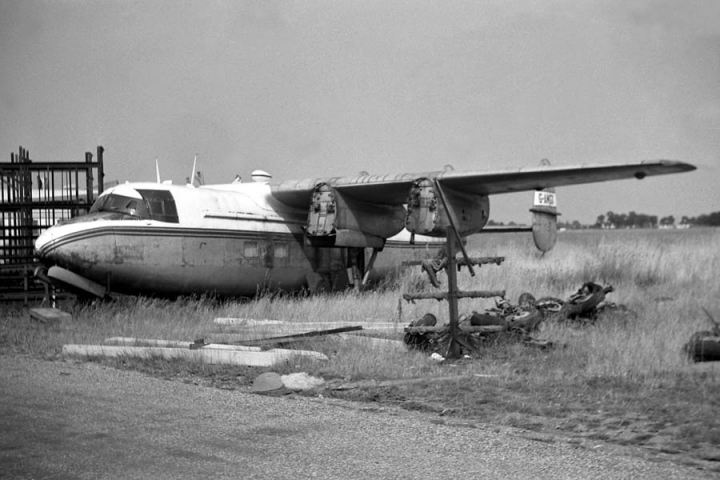 This photo (kindly supplied by Iain MacKay) shows its sad demise, ready for scrap.
 -
-
-
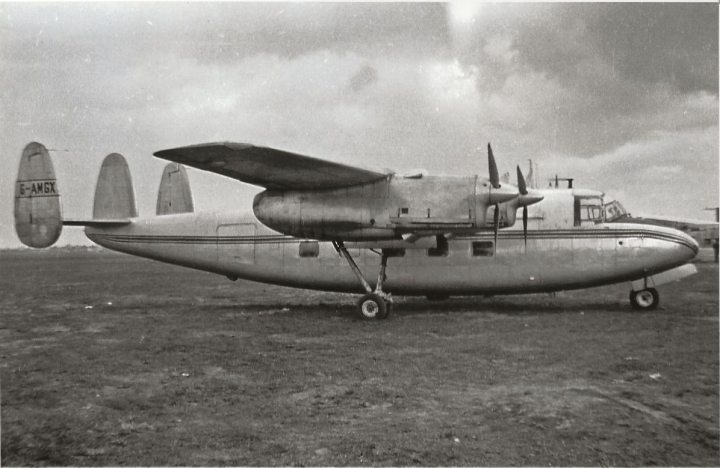 The aircraft prior to Balfour ownership
BAL-AMi Flying Showroom
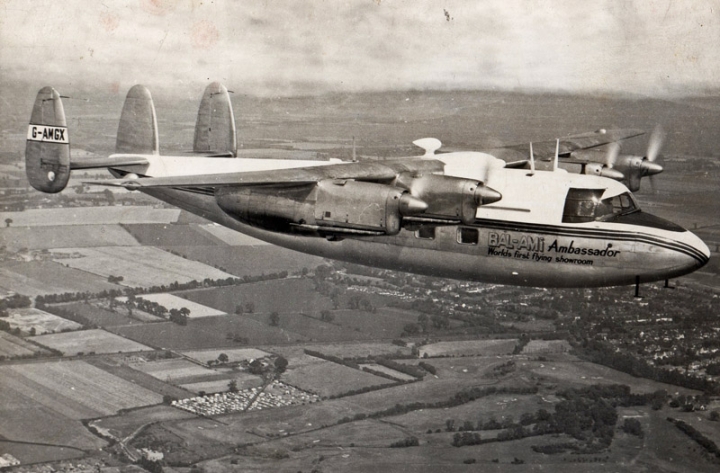
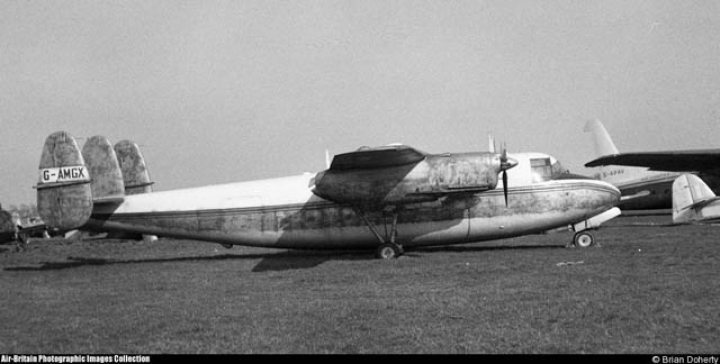
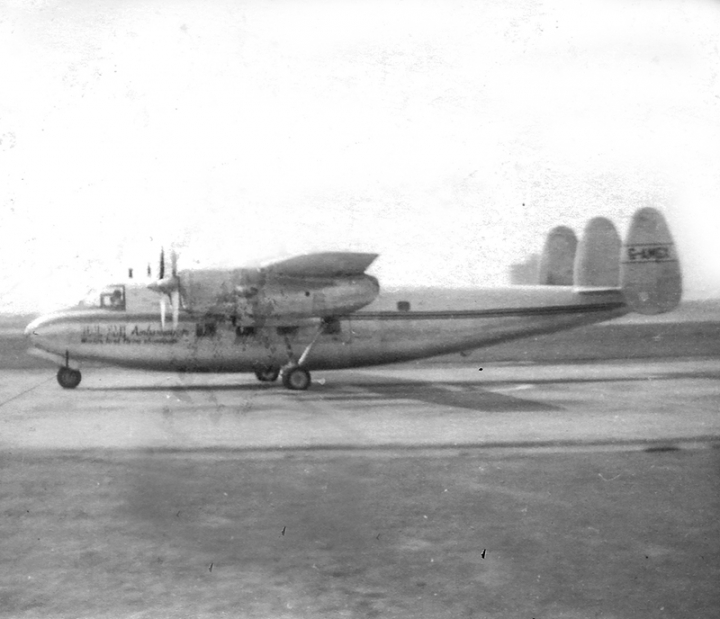
This aircraft, Miles Marathon M60 HPR 128 G-AMGX, was used by Balfour Engineering between May 1955 and August 1956 as a flying showroom around the UK and beyond for BAL-AMi jukebox promotion.
The Miles M60 Marathon was a British post-World War II four-engine transport aircraft designed for passenger, touring, and trainer roles. Though initially developed by Miles Aircraft, the project was finalised by Handley-Page following financial difficulties within the original company. It was the first Miles-built aircraft to feature all-metal construction and the company's first four-engined design. The aircraft was powered by four de-Havilland Gipsy Queen 70 engines.
Following the financial collapse of Miles Aircraft, the company's assets were acquired by Handley-Page, leading to the rebranding of the project as the Handley Page H.P.R.1 Marathon. A production order for 50 aircraft was initially placed (30 for BEA, 20 for BOAC). However, orders were eventually cancelled or reduced, and Handley-Page built only 40, some of which were purchased by the RAF.
A significant number of the aircraft (28) were modified for the Royal Air Force as navigation trainers, designated the Marathon T.Mk II, serving for roughly six years before being replaced by Vickers Varsities.
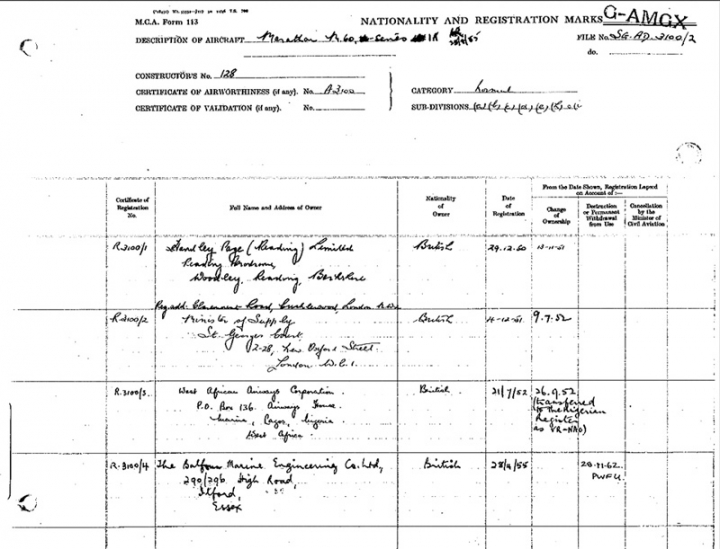
The aircraft which would ultimately end up with Balfour was built in 1950 and intended to be purchased by BEA (British European Airways), but the option was not taken up. After a couple of years in storage at the manufacturer, Handley-Page of Woodley, it was sold in September 1952 to West African Airways. After around 18 months of service it was eventually sold on to Balfour.
In April 1955, Marathon G-AMGX was delivered to Southend from West African Airways and was fitted out for its flying showroom role. It was named "BAL-AMi Ambassador" and subtitled "World's First Flying Showroom".
Sam Norman also learned to fly and owned his own Miles Gemini, which was based at Southend airport, along with his newly-acquired Marathon. Flight magazine during August 1955 informed readers that the aircraft was “…now being prepared for a tour of North America”. It departed Heathrow on 18th August bound for Canada and the USA, but it seems those plans very quickly came to nothing. Departing on the proposed tour, it was found that the installation of the heavy jukeboxes had reduced fuel capacity to such an extent, that the aircraft was now unable to fly the leg from Scotland to Iceland, and so it turned back to Southend.
The aircraft was one of the 40 of this particular model built at Reading aerodrome between 1945 and 1950. It was eventually scrapped in 1962 at Southend airport, its Certificate of Airworthiness having expired in August 1956.
As a footnote, the Mile Marathon M60 had a dreadful safety record. Of the 40 aircraft built, nine were involved in accidents (eight in the RAF), eight of those planes were destroyed, and seven people were killed.